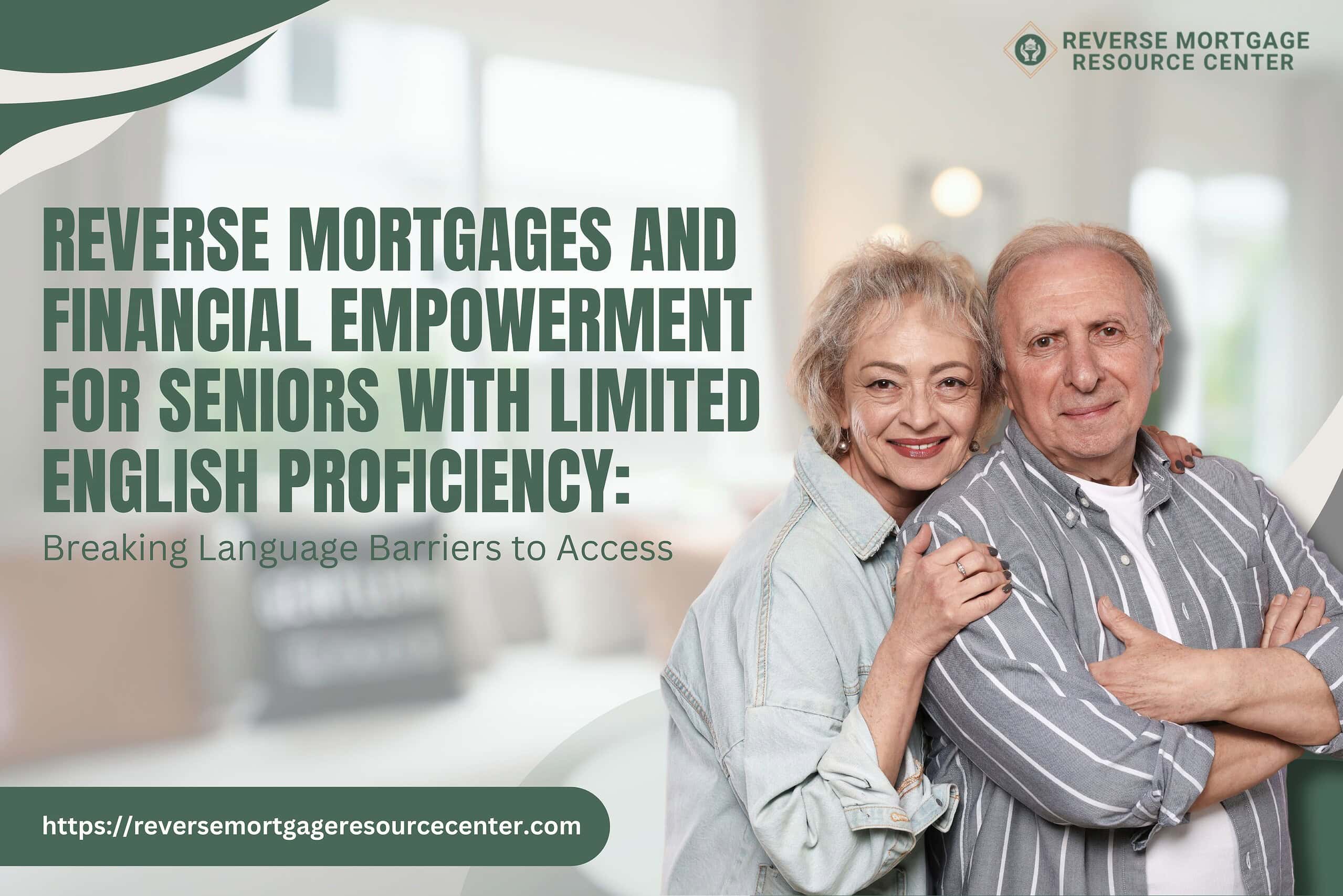
Reverse Mortgages and Financial Empowerment for Seniors with Limited English Proficiency: Breaking Language Barriers to Access
As seniors enter retirement, financial challenges often become more pronounced. With limited incomes and increasing expenses, many seek avenues to bolster their financial stability. Reverse mortgages offer a potential solution, allowing seniors to tap into the equity of their homes to supplement their retirement income. However, for seniors with limited English proficiency, accessing and understanding information about reverse mortgages can be daunting due to language barriers. In this article, we explore strategies to provide reverse mortgage education and support in languages other than English, ensuring that seniors with diverse linguistic backgrounds can make informed decisions and achieve financial empowerment in their golden years.
Understanding Reverse Mortgages: A Tool for Financial Security
Before delving into language barriers, it’s crucial to grasp the fundamentals of reverse mortgages. Essentially, a reverse mortgage enables homeowners aged 62 and older to convert part of their home equity into accessible funds without selling their home. Unlike traditional mortgages, borrowers are not required to make monthly mortgage payments; instead, the loan is repaid when the borrower moves out of the home or passes away. This financial tool can be particularly beneficial for seniors seeking additional income streams during retirement.
Language Barriers: A Hindrance to Informed Decision-Making
For seniors with limited English proficiency, accessing information about reverse mortgages can be a significant challenge. Language barriers create obstacles at every stage of the decision-making process, from understanding the terms and conditions of the loan to evaluating its potential benefits and risks. Without access to comprehensive information in their native languages, seniors may feel overwhelmed and uncertain about whether a reverse mortgage is the right choice for them. This lack of understanding can lead to hesitation or even avoidance of potentially beneficial financial opportunities.
Strategies for Overcoming Language Barriers
To ensure that seniors with limited English proficiency can make informed decisions about reverse mortgages, it’s essential to implement strategies that break down language barriers and provide accessible resources. Here are several effective approaches:
Multilingual Education and Counseling Services
Establishing multilingual education and counseling services is paramount in empowering seniors from diverse linguistic backgrounds. Partnering with translators and interpreters fluent in languages commonly spoken by seniors in the community can facilitate clear communication and understanding. By offering educational materials, workshops, and one-on-one counseling sessions in multiple languages, seniors can receive personalized guidance tailored to their needs.
Culturally Competent Outreach Programs
Cultural competence plays a pivotal role in reaching and engaging seniors with limited English proficiency. Outreach programs should be designed with cultural sensitivity in mind, taking into account the unique values, beliefs, and communication preferences of different linguistic communities. By incorporating cultural elements into educational materials and outreach efforts, seniors will feel more comfortable and receptive to learning about reverse mortgages.
Collaborative Partnerships with Community Organizations
Collaborating with local community organizations and ethnic associations can amplify outreach efforts and enhance accessibility. These organizations often serve as trusted sources of information and support within their respective communities. By partnering with them, financial institutions and housing agencies can leverage existing networks to disseminate multilingual resources and provide personalized assistance to seniors with limited English proficiency.
Utilization of Technology and Digital Tools
In today’s digital age, technology can be a powerful ally in breaking down language barriers. Developing online resources, such as informational videos, interactive tutorials, and webinars, in multiple languages can extend the reach of reverse mortgage education to a broader audience. Additionally, investing in multilingual chatbots or virtual assistants can offer immediate support and guidance to seniors navigating the complexities of reverse mortgages.
Empowering Seniors Through Linguistic Accessibility
Addressing language barriers is essential for ensuring that seniors with limited English proficiency have equal access to reverse mortgage education and support. By implementing strategies such as multilingual education services, culturally competent outreach programs, collaborative partnerships with community organizations, and utilization of technology, financial institutions and housing agencies can empower seniors to make informed decisions about their financial futures. Breaking down language barriers is not only a matter of accessibility but also a fundamental step toward promoting financial empowerment and security for all seniors, regardless of linguistic background. As we strive to build inclusive and equitable communities, let us commit to providing the necessary resources and support to help seniors thrive in their retirement years.
As the golden years should indeed be golden, let us ensure that linguistic diversity does not hinder financial empowerment for seniors. Through concerted efforts and dedication to linguistic accessibility, we can pave the way for a brighter and more secure future for all.
REVERSE MORTGAGE RESOURCE CENTER ~LIVE LIFE ON YOUR TERMS~
Our Lending Team has been serving our clients since 2004. We are passionate about serving our clients with integrity to help them achieve their financial goals.