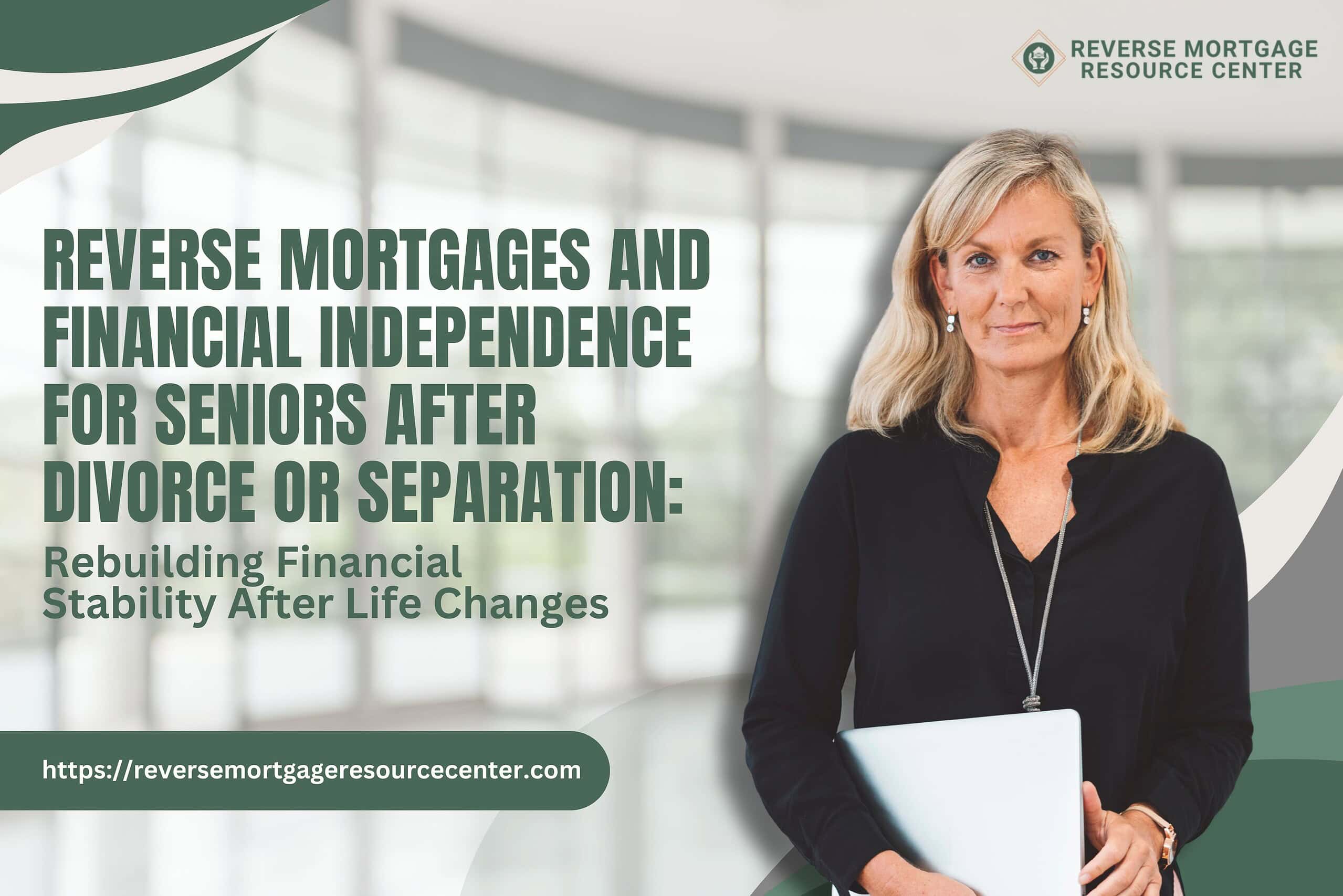
Reverse Mortgages and Financial Independence for Seniors After Divorce or Separation: Rebuilding Financial Stability After Life Changes
Life is a journey filled with twists, turns, and unexpected changes. For seniors facing divorce or separation later in life, navigating the financial implications can be daunting. The prospect of rebuilding financial stability after such a significant life event can seem overwhelming. However, there are strategies and resources available to help seniors regain their financial footing and achieve independence in their retirement years. One such tool that holds promise for seniors in this situation is the reverse mortgage.
Understanding the Financial Impact of Divorce or Separation
Divorce or separation later in life can have profound financial consequences, particularly for seniors who may have been relying on joint assets or spousal support to fund their retirement. Suddenly finding oneself on a single income or with diminished assets can be a harsh reality to confront. From managing day-to-day expenses to planning for long-term financial security, the challenges can be multifaceted and complex.
The division of assets during divorce or separation can significantly impact a senior’s financial situation. Retirement accounts, investments, real estate, and other assets accumulated over the years may need to be divided, leaving each spouse with a reduced financial portfolio. In some cases, one spouse may be awarded the family home, while the other receives other assets or a settlement. This division can leave seniors grappling with uncertainty about their financial future and how they will support themselves in retirement.
The Importance of Financial Independence in Retirement
Financial independence is a cornerstone of a fulfilling retirement. It provides seniors with the freedom to pursue their passions, maintain their desired lifestyle, and weather unexpected expenses without undue stress. Achieving financial independence after divorce or separation may require careful planning and strategic decision-making, but it is an attainable goal with the right support and resources.
For many seniors, achieving financial independence means having sufficient income to cover essential expenses such as housing, healthcare, food, and utilities, as well as discretionary spending for leisure activities, travel, and hobbies. It also means having a secure financial safety net to handle emergencies and unexpected costs, such as medical bills or home repairs.
Exploring Options: Reverse Mortgages
One option that seniors may consider as they work towards financial independence after divorce or separation is a reverse mortgage. A reverse mortgage is a loan that allows homeowners aged 62 and older to convert a portion of their home equity into cash, which can be received as a lump sum, fixed monthly payments, or a line of credit. Unlike traditional mortgages, borrowers are not required to make monthly payments. Instead, the loan is repaid when the borrower sells the home, moves out permanently, or passes away.
Reverse mortgages are designed to provide seniors with greater financial flexibility and security in retirement. By tapping into their home equity, seniors can access a source of income to supplement their retirement savings and cover expenses without having to sell their home or take on additional debt. This can be particularly beneficial for seniors who may be facing a reduction in income or financial strain due to divorce or separation.
The Benefits of Reverse Mortgages for Seniors
Reverse mortgages offer several benefits that can help seniors rebuild financial stability and achieve independence in their retirement years:
1. Supplemental Income: For seniors who may be facing a reduction in income due to divorce or separation, a reverse mortgage can provide much-needed supplemental income to cover expenses such as housing, healthcare, and everyday living costs.
2. Access to Home Equity: Many seniors have a significant portion of their wealth tied up in their homes. A reverse mortgage allows them to tap into this equity without having to sell their home or take on additional debt, providing a valuable source of liquidity.
3. Flexibility: Reverse mortgages offer flexibility in how funds are received, giving seniors the freedom to choose the payment option that best suits their needs and lifestyle. Whether they prefer a lump sum for immediate expenses or ongoing monthly payments to supplement their income, reverse mortgages can be tailored to individual preferences.
4. No Monthly Mortgage Payments: One of the most attractive features of reverse mortgages is that borrowers are not required to make monthly mortgage payments. This can provide significant relief for seniors on fixed incomes, allowing them to allocate their resources towards other priorities.
5. Non-Recourse Loan: Reverse mortgages are non-recourse loans, which means that the borrower (or their estate) will never owe more than the value of the home, even if the loan balance exceeds the home’s worth. This protects seniors and their heirs from being saddled with additional debt.
Considerations and Precautions
While reverse mortgages can be a valuable tool for seniors seeking financial independence after divorce or separation, it’s essential to approach them with caution and carefully consider all aspects before making a decision. Some key considerations include:
1. Impact on Heirs: Borrowers should consider how a reverse mortgage may affect their heirs’ inheritance. While heirs have the option to repay the loan and keep the home, they may also need to sell the home to settle the debt.
2. Costs and Fees: Reverse mortgages typically come with upfront costs and fees, including origination fees, closing costs, and mortgage insurance premiums. Seniors should fully understand these costs before proceeding.
3. Long-Term Implications: Borrowers should carefully weigh the long-term implications of a reverse mortgage, including how it may impact their ability to age in place and their overall financial security in retirement.
4. Counseling Requirement: Before obtaining a reverse mortgage, seniors are required to undergo counseling with a HUD-approved counselor to ensure they fully understand the terms and implications of the loan.
Seeking Professional Guidance
Navigating the complexities of divorce, separation, and financial planning in retirement can be challenging, especially for seniors facing these circumstances later in life. That’s why it’s crucial for seniors to seek professional guidance from financial advisors, estate planners, and other experts who can provide personalized advice and support.
Financial advisors can help seniors assess their current financial situation, set realistic goals, and develop a comprehensive plan to achieve financial independence in retirement. Estate planners can assist with estate planning, wills, trusts, and other legal matters to ensure that seniors’ assets are protected and distributed according to their wishes.
REVERSE MORTGAGE RESOURCE CENTER ~LIVE LIFE ON YOUR TERMS~
Our Lending Team has been serving our clients since 2004. We are passionate about serving our clients with integrity to help them achieve their financial goals.