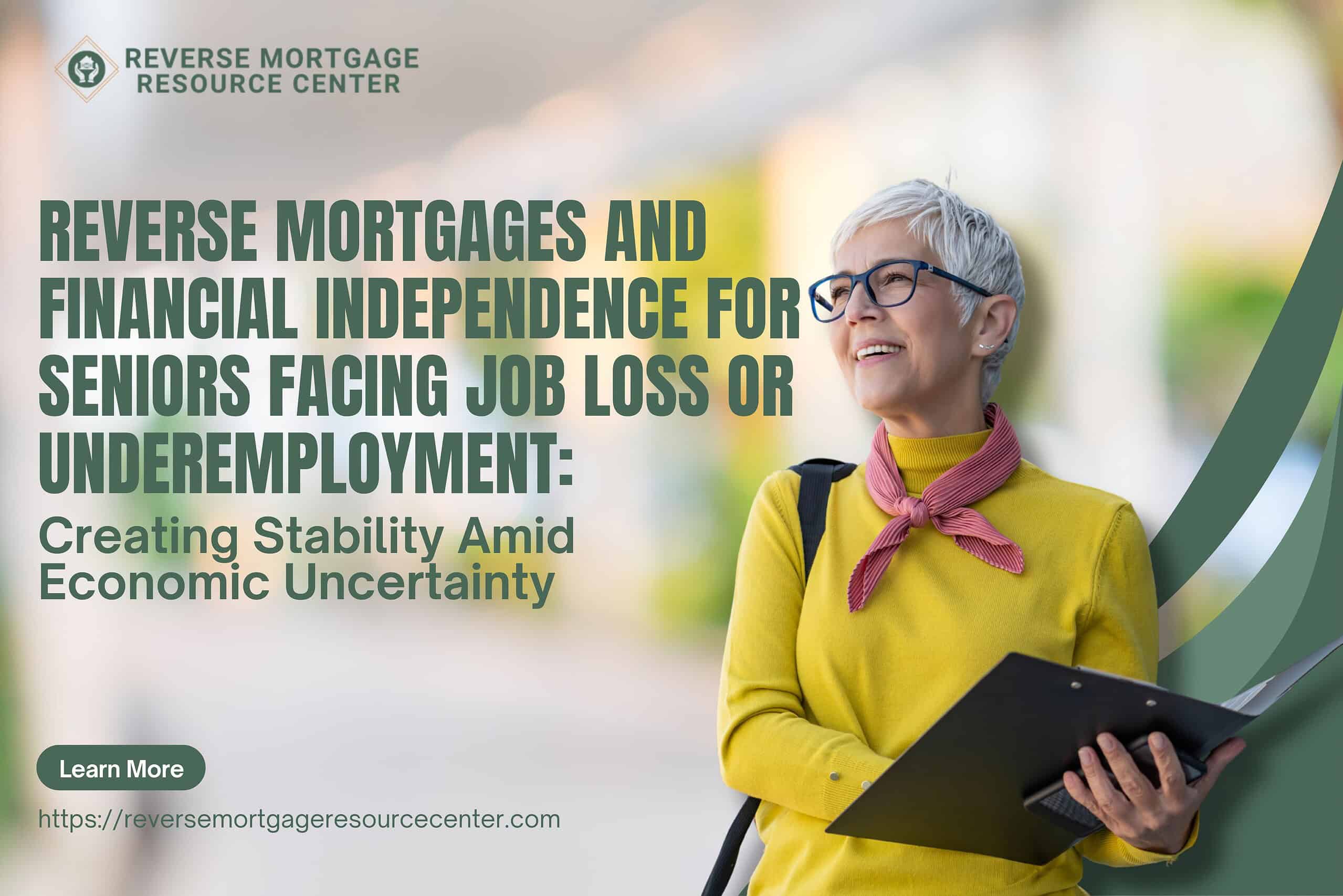
Reverse Mortgages and Financial Independence for Seniors Facing Job Loss or Underemployment: Creating Stability Amid Economic Uncertainty
In the face of economic downturns or unexpected job losses, seniors often find themselves in precarious financial situations. For those relying on fixed retirement incomes or struggling with underemployment, maintaining financial stability becomes paramount. Amidst these challenges, reverse mortgages emerge as a viable solution to help seniors weather financial storms, ensuring they can meet their obligations and maintain a sense of independence. This article delves into the intricacies of reverse mortgages and how they can serve as a lifeline for seniors navigating uncertain economic times.
Understanding Reverse Mortgages: A Path to Financial Relief
Reverse mortgages offer homeowners aged 62 and older the opportunity to convert a portion of their home equity into easily accessible funds without the need to sell their home or take on additional monthly mortgage payments. Unlike traditional mortgages where borrowers make monthly payments to the lender, reverse mortgages provide homeowners with payments from the lender, effectively reversing the payment stream.
These loans are typically structured as either lump-sum payments, monthly installments, lines of credit, or a combination of these options. The amount that can be borrowed depends on various factors, including the borrower’s age, home value, and current interest rates. Additionally, borrowers must continue to pay property taxes, homeowners insurance, and maintain the property to remain in compliance with the terms of the loan.
Financial Challenges for Seniors Facing Job Loss or Underemployment
The economic landscape can be particularly unforgiving for seniors facing job loss or underemployment. Fixed incomes may not be sufficient to cover essential expenses, let alone unexpected costs such as medical emergencies or home repairs. Moreover, dipping into retirement savings prematurely can jeopardize long-term financial security, leaving seniors vulnerable to financial hardship in their later years.
Seniors experiencing job loss or underemployment may find themselves struggling to make ends meet, leading to increased stress and anxiety about their financial future. Many may be forced to consider drastic measures such as selling their homes or downsizing to more affordable accommodations, disrupting their sense of stability and independence.
Maintaining Stability Through Reverse Mortgages
In times of economic uncertainty, reverse mortgages can offer a lifeline to seniors seeking stability. By tapping into their home equity, seniors can access much-needed funds to cover expenses while preserving their savings and investments. Whether it’s supplementing monthly income, covering medical bills, or retrofitting their homes for aging in place, reverse mortgages provide flexibility and peace of mind.
One of the key advantages of reverse mortgages is that they do not require monthly payments. Instead, the loan balance accrues over time and is typically repaid when the borrower sells the home, moves out permanently, or passes away. This feature can be particularly beneficial for seniors facing job loss or underemployment, as it alleviates the burden of making regular mortgage payments while providing access to funds to cover immediate financial needs.
Moreover, reverse mortgages offer borrowers the option to receive funds in various ways, allowing them to customize their financial strategy to suit their individual preferences and circumstances. Whether they choose to receive a lump sum upfront, regular monthly payments, or a line of credit for future use, seniors have the flexibility to tailor their reverse mortgage to meet their specific needs.
Protecting Homeownership: Dispelling Common Misconceptions
One common misconception surrounding reverse mortgages is the belief that homeowners relinquish ownership of their homes. On the contrary, borrowers retain ownership and can continue to live in their homes for as long as they choose, provided they meet loan obligations such as maintaining the property and paying property taxes and insurance. Upon the borrower’s passing or sale of the home, any remaining equity belongs to the borrower or their heirs.
This feature distinguishes reverse mortgages from other home equity conversion options and provides reassurance to seniors concerned about losing their homes. By preserving homeownership rights, reverse mortgages empower seniors to maintain control over their living arrangements and remain in familiar surroundings, which can have significant emotional and psychological benefits, especially during times of financial uncertainty.
Navigating the Reverse Mortgage Landscape: Seeking Expert Guidance
While reverse mortgages offer undeniable benefits, navigating the intricacies of these financial instruments requires careful consideration and expert guidance. Seniors contemplating a reverse mortgage should consult with qualified financial advisors and housing counselors who can provide personalized advice tailored to their unique circumstances. Understanding the terms, fees, and implications of a reverse mortgage is crucial in making informed decisions that align with long-term financial goals.
Housing counselors approved by the U.S. Department of Housing and Urban Development (HUD) can offer impartial guidance and help seniors evaluate whether a reverse mortgage is the right option for them. These counselors can provide information about alternative financing options, potential risks and benefits, and strategies for maximizing the benefits of a reverse mortgage while minimizing associated costs.
Planning for the Future: Integrating Reverse Mortgages Into Retirement Strategies
Reverse mortgages are not one-size-fits-all solutions, but rather tools to be integrated into comprehensive retirement strategies. Seniors should assess their financial goals, current needs, and future aspirations to determine if a reverse mortgage aligns with their objectives. For some, it may serve as a temporary bridge during periods of financial strain, while for others, it could provide a sustainable source of funds which can help supplement income throughout retirement.
Integrating a reverse mortgage into a retirement strategy requires careful planning and consideration of various factors, including anticipated expenses, desired lifestyle, and long-term financial goals. Seniors should work closely with financial advisors and housing counselors to develop a customized plan that leverages the benefits of a reverse mortgage while mitigating potential risks.
Addressing Concerns: Weighing the Pros and Cons
As with any financial decision, it’s essential for seniors to weigh the pros and cons of a reverse mortgage before proceeding. While these loans offer liquidity and flexibility, they also come with associated costs, including origination fees, mortgage insurance premiums, and interest accrual. Seniors should carefully consider how these factors impact their overall financial picture and whether the benefits outweigh the costs in their specific situation.
Additionally, seniors should be aware of the potential risks associated with reverse mortgages, such as the impact on eligibility for means-tested government benefits like Medicaid or Supplemental Security Income (SSI). While reverse mortgage proceeds are generally not considered income for tax purposes, they can affect eligibility for certain assistance programs, so it’s essential to understand the implications before moving forward.
REVERSE MORTGAGE RESOURCE CENTER ~LIVE LIFE ON YOUR TERMS~
Our Lending Team has been serving our clients since 2004. We are passionate about serving our clients with integrity to help them achieve their financial goals.