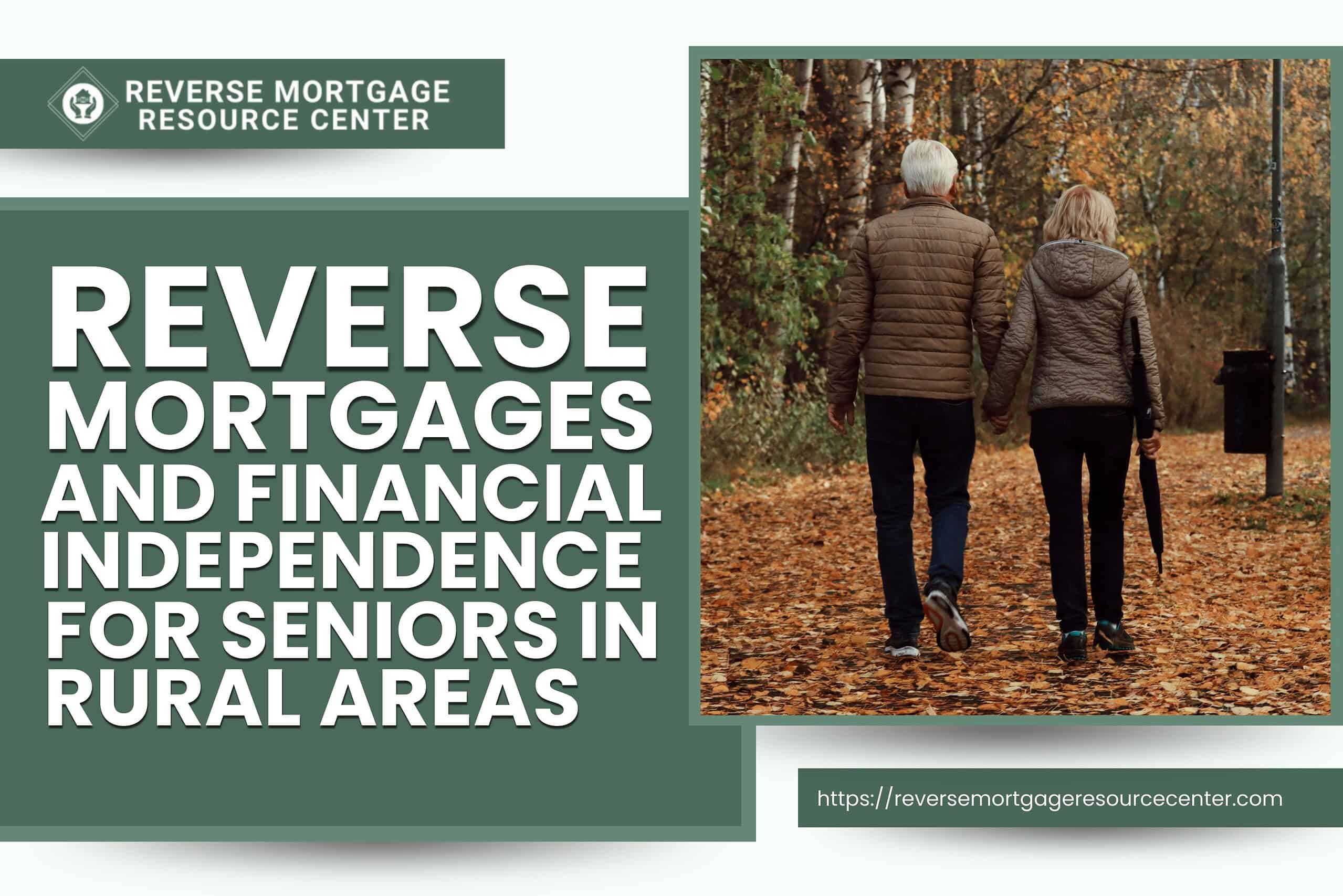
Reverse Mortgages and Financial Independence for Seniors in Rural Areas
In the tranquil expanses of rural communities, where the pace of life is measured and the landscape paints a serene picture, seniors often face unique financial challenges. While the rural lifestyle offers tranquility and closeness to nature, it can also present obstacles to financial stability in retirement. Many seniors in these areas find themselves asset-rich but cash-poor, with their wealth tied up in their homes and limited access to traditional financial solutions. However, amidst these challenges lie opportunities for financial independence, and one such avenue worth exploring is the realm of reverse mortgages.
Understanding the Rural Reality
Rural living embodies a distinct charm, but it comes with its own set of financial hurdles. Limited access to services and amenities, reduced employment opportunities, and sparse public transportation infrastructure are common features of rural life. Moreover, the aging population in these areas faces the additional strain of dwindling support networks as younger generations migrate to urban centers in search of opportunities.
For seniors in rural communities, the equity accumulated in their homes often represents their most significant asset. However, transforming this equity into usable funds to support their retirement can be challenging. Traditional mortgage options may not be readily available or suitable for those with fixed incomes and limited liquidity. In such circumstances, reverse mortgages emerge as a viable solution offering financial flexibility and stability.
The Power of Reverse Mortgages
Reverse mortgages have gained traction as a financial tool for seniors seeking to leverage the equity in their homes without selling or relinquishing ownership. Unlike traditional mortgages where homeowners make monthly payments to a lender, reverse mortgages enable homeowners aged 62 and older to receive readily accessible funds from the lender, effectively converting a portion of their home equity into readily accessible funds.
One of the primary advantages of reverse mortgages is that they provide a stream of income without the burden of monthly repayments. Instead, the loan balance is repaid when the borrower sells the home, moves out, or passes away, with any remaining equity going to the homeowner or their heirs. This feature is particularly appealing to seniors in rural areas who may rely on their homes as their primary source of wealth and wish to maintain ownership and occupancy for as long as possible.
Tailoring Solutions to Rural Challenges
While reverse mortgages offer a promising avenue for enhancing financial security in retirement, addressing the unique challenges of rural living is crucial. In rural communities, property values may not appreciate at the same rate as in urban areas, potentially affecting the amount of equity available for borrowing. Additionally, the limited availability of reverse mortgage lenders and counselors in rural areas can hinder access to information and guidance for prospective borrowers.
To overcome these challenges, concerted efforts are needed to increase awareness and accessibility of reverse mortgage products in rural communities. Collaborations between government agencies, financial institutions, and community organizations can play a pivotal role in expanding outreach and education initiatives tailored to the needs of rural seniors. Providing resources such as online tools, informational seminars, and mobile counseling services can empower seniors to make informed decisions about their financial future.
Safeguarding Financial Well-Being
As with any financial product, it is essential for seniors considering reverse mortgages to exercise caution and seek professional guidance. Understanding the terms, costs, and potential risks associated with reverse mortgages is paramount to making informed choices. Counseling services offered by HUD-approved agencies can provide valuable insights and assistance in navigating the complexities of reverse mortgage transactions.
Furthermore, incorporating safeguards and consumer protections is critical to ensuring the financial well-being of rural seniors. Provisions such as mandatory counseling, caps on fees, and eligibility criteria can help prevent abuse and exploitation while promoting responsible lending practices. By fostering transparency and accountability within the reverse mortgage industry, policymakers and regulators can uphold the integrity of these financial instruments and safeguard the interests of vulnerable seniors.
Embracing Financial Independence
In the tapestry of rural life, where the bonds of community run deep and the rhythm of existence is attuned to nature’s cadence, financial independence is not just a matter of economic security but a testament to resilience and self-reliance. Reverse mortgages offer rural seniors the opportunity to unlock the value of their homes and embrace the freedom to live on their own terms in retirement.
By leveraging the equity accumulated over a lifetime of hard work and dedication, seniors can enjoy greater financial flexibility to pursue their passions, support their families, and create lasting legacies. Whether it’s renovating a farmhouse, embarking on a cross-country road trip, or simply savoring the tranquility of a front porch swing, reverse mortgages empower rural seniors to embrace the richness of life without compromise.
In the journey towards financial independence, reverse mortgages serve as a beacon of hope and opportunity for seniors in rural communities. By harnessing the potential of their most valuable asset—their homes—seniors can chart a course towards a more secure and fulfilling retirement, where the golden years truly shine bright amidst the pastoral beauty of rural America.
REVERSE MORTGAGE RESOURCE CENTER ~LIVE LIFE ON YOUR TERMS~
Our Lending Team has been serving our clients since 2004. We are passionate about serving our clients with integrity to help them achieve their financial goals.